



Jarad, Golgari Lich Lord
Color Identity


Details
Mana Value
4
Popularity
#207
of 3,466 commanders · via EDHREC
Card Text
Legendary Creature — Zombie Elf
Jarad gets +1/+1 for each creature card in your graveyard.
{1}{B}{G}, Sacrifice another creature: Each opponent loses life equal to the sacrificed creature's power.
Sacrifice a Swamp and a Forest: Return this card from your graveyard to your hand.
2/2
Playstyle
Midrange · Steady · Group influence · Incremental wins
- Aggression
- 2 of 5
- Speed
- 2 of 5
- Interaction
- 2 of 5
- Combat
- 3 of 5
- Engine
- 4 of 5
- Complexity
- 4 of 5
Card Price
Strategy Guides
Graveyard Strategy Guide
Graveyard decks are for players who want every discarded, milled, or destroyed card to remain part of the game plan. This strategy wants to stock the graveyard, using self-mill, discard outlets, sacrifice, and dredge-style cards, to win by recurring threats, lands, and value pieces until opponents run out of clean answers. Unlike Reanimator, graveyard value decks EDH players build are not centered on one huge creature arriving early, and unlike Mill they use self-mill as fuel rather than treating libraries as the main target. The best graveyard commanders turn the graveyard into a steady resource engine that can rebuild after removal.
Reanimator Strategy Guide
Reanimator decks are for players who want to turn the graveyard into a shortcut for creatures that should cost far more mana. This strategy wants to load its own graveyard with high-impact targets, using discard, self-mill, and Entomb-style tutors, to win by casting cheap reanimation spells that cheat creatures into play ahead of schedule. Unlike Graveyard value decks, Reanimator is less about recurring small resources every turn, and unlike Mill it is not trying to empty libraries as the primary weapon. The best reanimator commanders and graveyard commanders help discard threats, return them, or convert each reanimated creature into immediate pressure.
Mill Strategy Guide
Mill decks are for players who want to pressure a different resource: the cards left in each library. This strategy wants to put cards from libraries into graveyards, using repeatable mill commanders, doublers, and self-mill engines, to win by emptying opponents' decks or by converting stocked graveyards into value. Unlike Reanimator, Mill is not mainly trying to cheat one creature into play, and unlike Graveyard value it treats milling as the weapon or fuel source rather than the recursion engine itself. The best mill decks EDH players build respect the multiplayer math by multiplying output, protecting engines, or turning every milled card into another resource.
Sacrifice Strategy Guide
Sacrifice decks are for players who want their own permanents to be flexible resources rather than pieces to protect at all costs. This strategy wants to feed creatures, artifacts, and tokens into a sacrifice outlet, using fodder makers, recursion, and sacrifice commanders, to win through mana loops, edicts, drain payoffs, or a steady resource lead. Unlike Aristocrats, it is broader than death trigger drain, and unlike Tokens it values bodies mainly as expendable fuel. The best sacrifice commanders keep the engine moving even when opponents point removal at your board.
Appears in These Collections
Similar Commanders
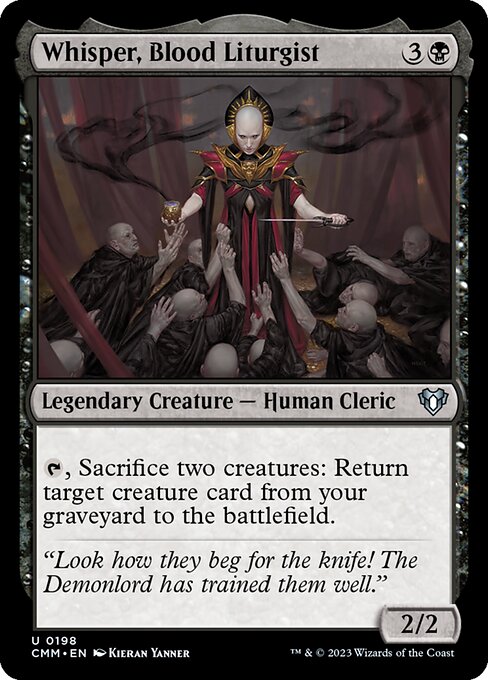
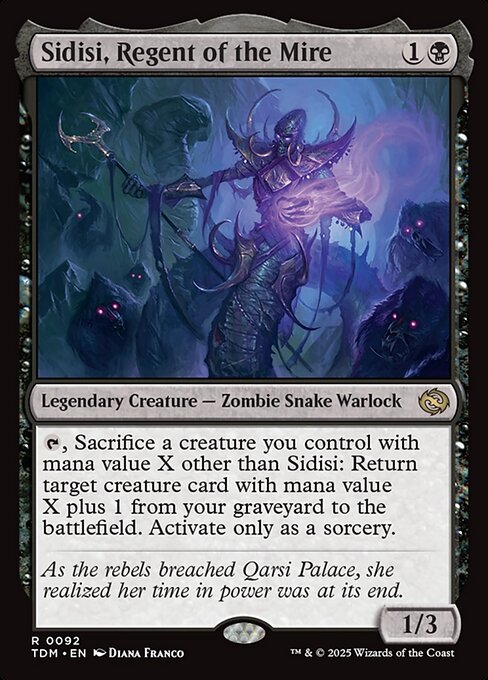
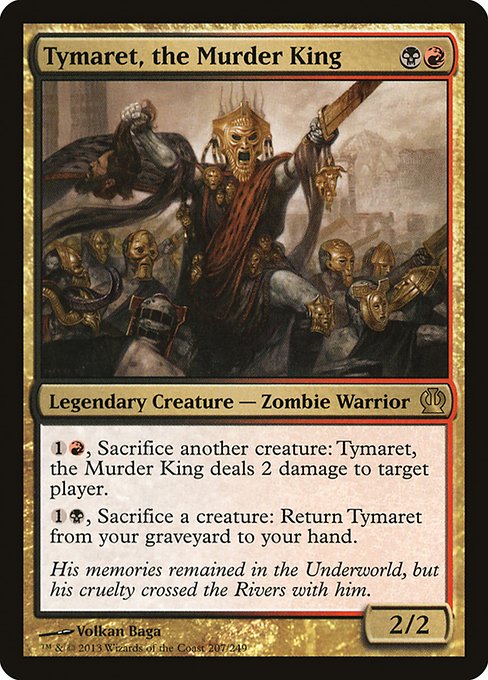
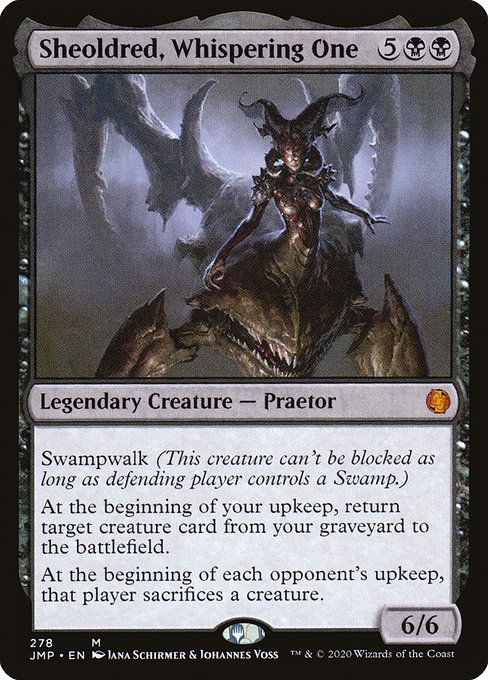
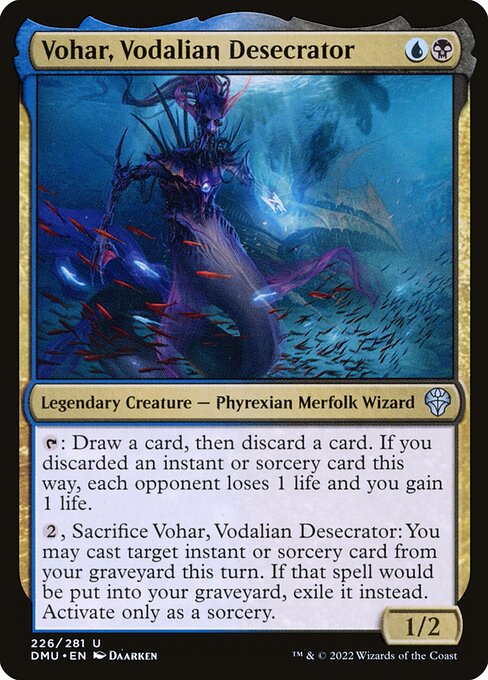
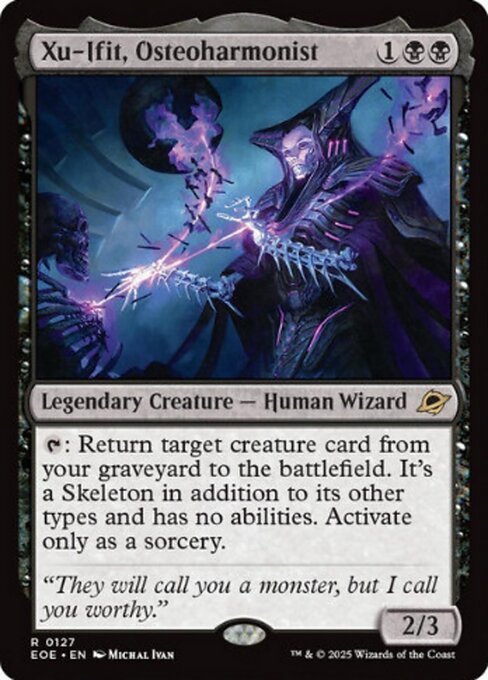
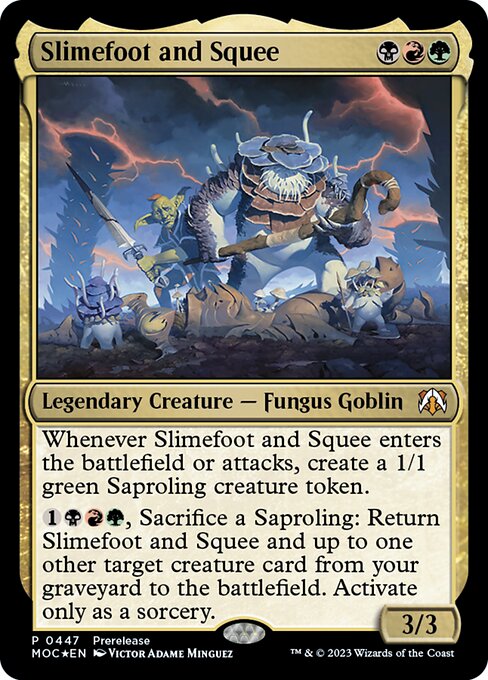
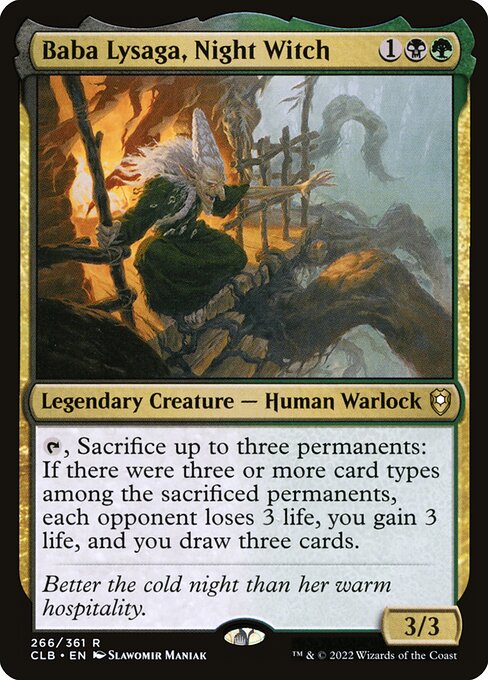
Popular Commanders
| # | Commander | Identity | Strategy | Price |
|---|---|---|---|---|
| 01 | 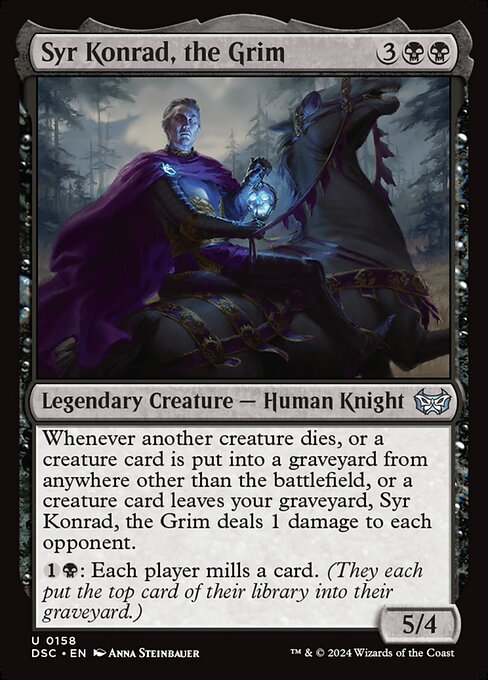 Syr Konrad, the Grim Syr Konrad, the Grim | | Mill | $1.76 |
| 02 | 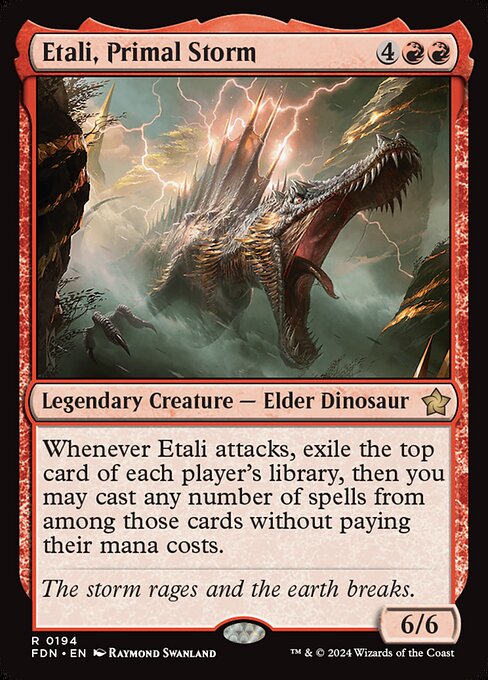 Etali, Primal Storm Etali, Primal Storm |  | Extra Combats | $0.66 |
| 03 | 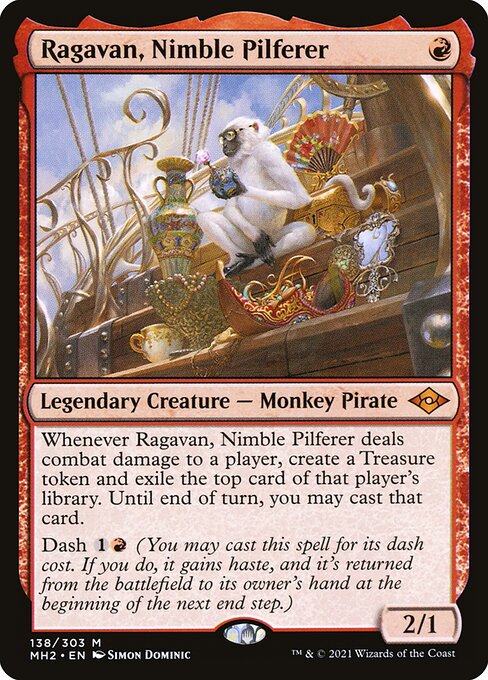 Ragavan, Nimble Pilferer Ragavan, Nimble Pilferer | | Treasure | $41.73 |
| 04 | 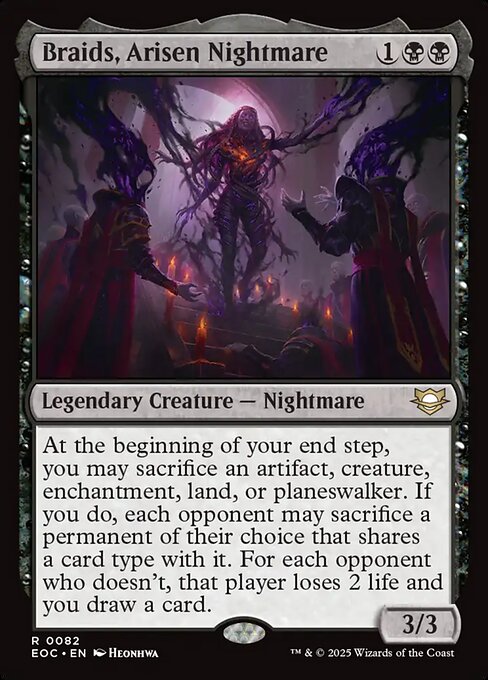 Braids, Arisen Nightmare Braids, Arisen Nightmare | | Aristocrats | $4.61 |
| 05 | 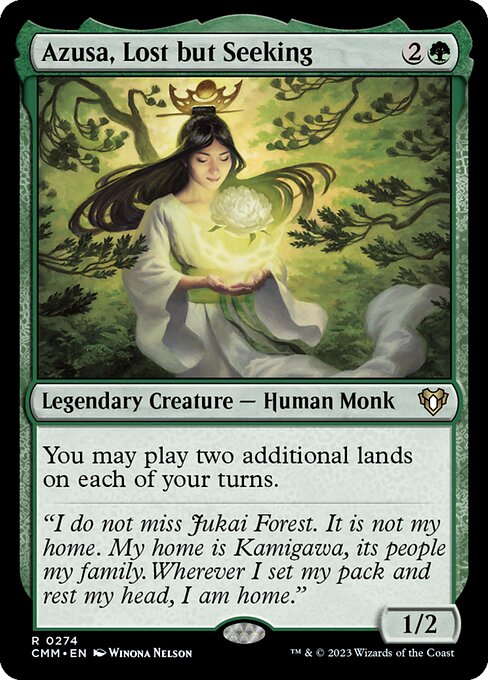 Azusa, Lost but Seeking Azusa, Lost but Seeking | | Lands Matter | $13.07 |
| 06 | 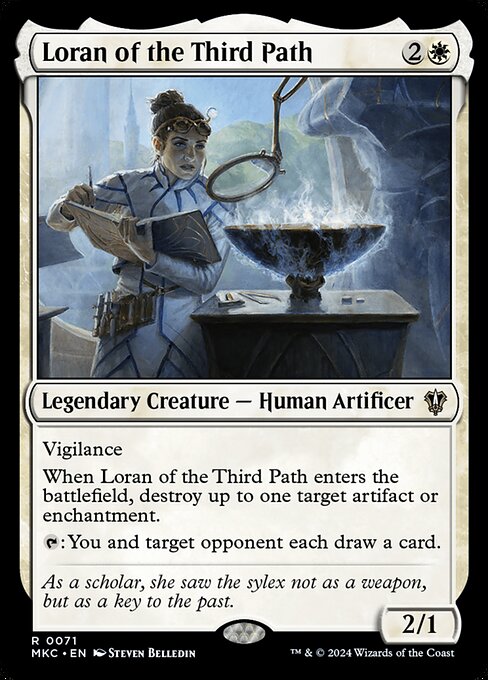 Loran of the Third Path Loran of the Third Path |  | Group Hug | $7.26 |
| 07 | 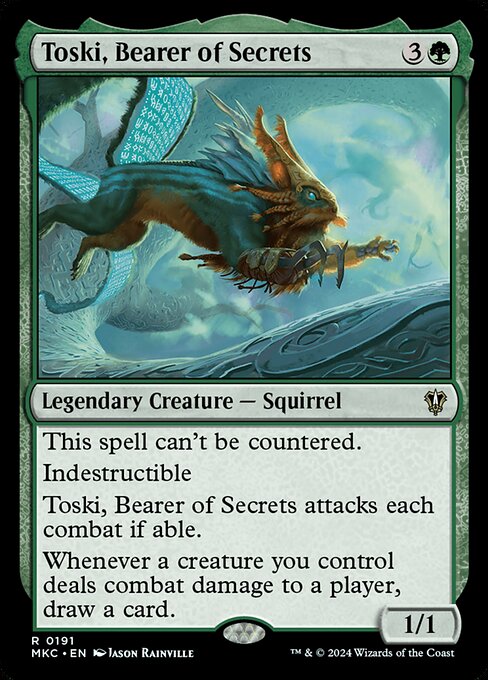 Toski, Bearer of Secrets Toski, Bearer of Secrets | | Equipment | $7.99 |
| 08 | 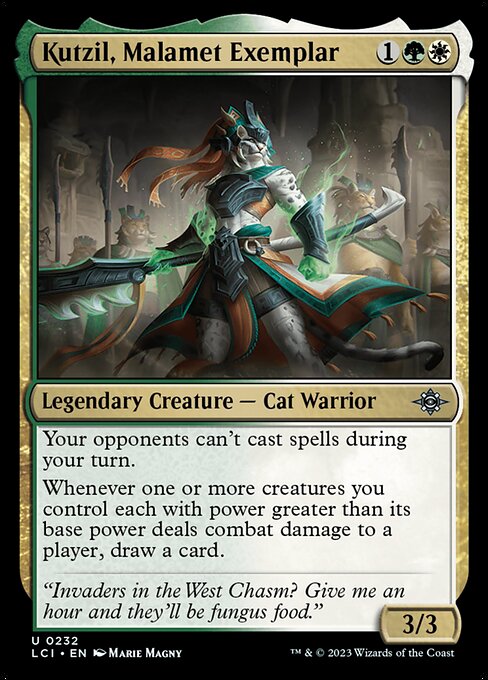 Kutzil, Malamet Exemplar Kutzil, Malamet Exemplar | | +1/+1 Counters | $2.70 |